
Getting Started
As business needs grow and change, ERP alternatives are becoming an option for companies looking for easier workflows, better automation, and more flexible ways to manage their work. Traditional ERP systems help businesses handle important activities, but some companies are now exploring newer platforms with flexible features and AI-based tools.
Today, businesses need software that does more than record transactions and prepare reports. They also need tools that help them find problems, reduce repeated tasks, and make better decisions. Because of these changing needs, many companies are looking at different options for managing their business operations.
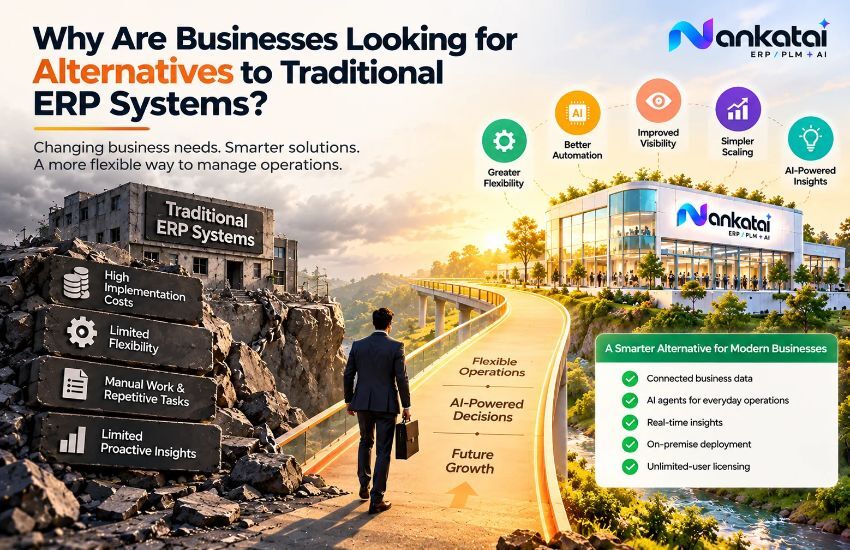
Common Challenges with Traditional ERP Systems
Traditional ERP systems help companies manage important activities such as finance, inventory, purchasing, production, and human resources. However, some systems can become difficult to manage when business needs change or companies expand.
Here are some common challenges businesses may face:
1. High implementation and maintenance costs
Setting up an ERP system can involve software license fees, changes to the software, employee training, infrastructure, and regular technical support. These expenses may increase when a company needs more users, extra features, or further changes.
For growing businesses, managing these costs can make it difficult to expand their business management systems without going over budget.
2. Limited flexibility
Some ERP systems require companies to change their existing work processes to match the software. Even small changes may need technical help, extra development work, or approval from several people.
These ERP system limitations can make it harder for businesses to respond quickly to changing customer needs or new work requirements.
3. Manual work and repetitive tasks
ERP software keeps business information organized in one place, but employees may still need to check documents, verify records, prepare reports, and follow up on unusual issues.
Without proper business process automation, these repeated tasks can take up employees' time, increase their workload, and slow down important decisions.
4. Limited proactive insights
Traditional systems often help businesses review past activities and understand what has already happened. However, finding a problem before it becomes serious may still require employees to study reports and look for unusual changes themselves.
Businesses are increasingly looking for tools that can highlight possible problems early and help employees decide what action to take before the situation gets worse.
Why Businesses Explore ERP Alternatives
Many companies are considering ERP alternatives because they want business software that fits their needs and makes daily work easier to manage.
Several reasons explain why businesses are looking at other options:
- Greater flexibility: Companies need systems that can adjust to new work methods, changing business needs, and the requirements of different departments without requiring too many changes.
- Better automation: Modern software can help reduce repeated tasks by handling information, checking records, and supporting everyday decisions.
- Improved visibility: When information from different departments is connected, managers can get a clearer picture of business performance and understand which areas need improvement.
- Simpler scaling: Companies want pricing and licensing plans that they can manage as they hire more employees and expand their business activities.
These needs are encouraging businesses to explore ERP software alternatives, including modular business platforms and systems that use AI.
Nankatai, developed by Modelcam Technologies, is one example of an Enterprise Intelligence Platform. According to Nankatai's website, the platform is designed for manufacturing businesses and combines business workflows with 66 AI agents. Its published offering also includes on-premise deployment and licensing for unlimited users.
The platform aims to help businesses keep track of their activities, identify unusual situations, and support work across different departments. Before choosing such a solution, companies should check whether its available features meet their specific business needs.
To gain more understanding about the comparison between EIP and ERP, you can review and study our blog post, “EIP vs ERP: What Is the Difference Between Enterprise Intelligence and Traditional ERP?”
The Role of AI in Modern Business Operations
AI in business is providing new ways to handle information, complete routine tasks, and support better decisions. Instead of depending only on employees to check every report and document, companies can use AI-based tools to handle certain activities and bring important information to their attention.
Here are some common uses of AI in business:
- Data Analysis: AI tools can study business information to find patterns, detect unusual changes, and identify repeated problems. For example, a manufacturing company may use these findings to understand why material costs are rising or why quality problems keep occurring.
- Data Automation: Automated workflows can collect details from documents, check information in different records, and prepare summaries. This reduces manual work and allows employees to spend more time on issues that need their attention.
- Sales Automation Tools: Depending on how they are connected to other systems, these tools can help businesses track orders, manage follow-up activities, and handle other regular sales tasks.
- Customer Relationship Management (CRM) AI: AI features in CRM software can help sales teams review customer interactions, keep customer information organized, and find opportunities to contact customers again.
These features can support business process automation and help companies manage their work more consistently. However, the results depend on the quality of the information, how well the systems work together, and whether employees check important results when needed.
Modern ERP Solutions vs. AI-Driven Business Platforms
Modern ERP solutions have improved over time. Many now provide cloud access, better connections with other software, automated workflows, and built-in AI features. This means that not all ERP systems have the same drawbacks, and businesses should consider the features of each system before making a decision.
The main difference is what a platform can do and how it helps employees manage their daily work. Some systems mainly store business information and prepare reports. AI-enabled platforms may offer additional features, such as tracking business activities, highlighting unusual situations, and helping employees complete specific tasks.
Nankatai explains that its EIP is designed to do more than record business transactions. It uses AI agents to track activities and support work across different departments. Its website mentions manufacturing applications such as production planning, inventory variance tracking, supplier quality checks, and management reporting.
For companies looking at modern alternatives to ERP software, the main point is to check whether these features can solve their actual business problems. AI should make work easier and provide useful results rather than simply add another layer of technology.
What Should Businesses Consider Before Choosing an ERP Alternative?
Before changing their existing software, companies should carefully review their needs. The new platform should address current problems without creating extra expenses or risks.
Here are some important factors to check:
- Business requirements: Find out which activities need improvement and which existing features are still necessary.
- Integration: Make sure the new platform can work with accounting software, databases, and other important business applications.
- Data security: Check how the system protects information, manages user access, stores data, and creates backups. Also, review the available deployment options.
- Total cost: Consider software licenses, setup, maintenance, employee training, and future expansion expenses.
- Scalability: Ensure the platform can handle more users, additional business locations, and increased workloads as the company grows.
- AI capabilities: Identify which tasks can be automated and which activities still need employees to review the results.
Companies should also consider ways to improve business operations without replacing their existing ERP system. Sometimes, adding automation tools or AI-based software to the current system can be a simpler and more affordable option than replacing the entire platform.
Conclusion: Choosing the Right Approach to Business Management
Businesses are considering ERP alternatives to make their workflows more flexible, gain a clearer view of their operations, and automate more tasks. However, replacing an existing system is not always necessary to achieve these improvements.
The right choice depends on the problems a company faces, its business goals, its software requirements, and the costs involved over time. Comparing traditional ERP systems with newer business platforms can help companies understand which features will make a real difference to their operations.
Manufacturing companies interested in AI-driven operations can also explore Nankatai's Enterprise Intelligence Platform. Before making a final decision, businesses should check its available features, confirm that they meet their requirements, and assess the practical benefits the platform can offer in everyday work.