
About AI-powered Manufacturing ERP Software
Running a manufacturing company requires managing several activities at the same time. From arranging raw materials and planning production to handling inventory, machines, employees, quality checks, and customer orders, every task needs proper attention. When these activities are handled manually, businesses may face delays, mistakes, and increased expenses. Manufacturing ERP software integrated with Artificial Intelligence (AI) can help make these tasks easier to manage.
Traditional ERP systems allow manufacturers to manage different business activities through a single platform. AI takes this a step further by helping companies understand business information, spot possible issues, and make informed decisions. By using AI-powered ERP software, manufacturers can improve their daily processes and manage factory operations more effectively.
Learn more about why businesses are exploring alternate options to traditional ERP systems in our blog post, “Why Are Businesses Looking for Alternatives to Traditional ERP Systems?”
Let's explore how AI is bringing changes to manufacturing operations and helping businesses achieve better results.
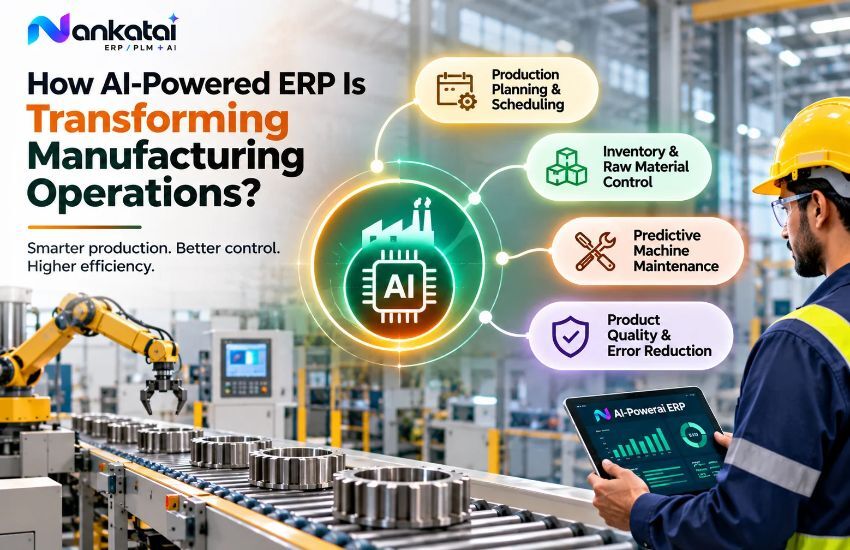
How AI is Bringing Changes to Manufacturing Operations?
1. Make Production Planning and Scheduling Easier
Proper production planning helps manufacturers complete orders on time and use their available resources wisely. Businesses must make sure that materials, machines, and workers are ready when needed. Without proper planning, production may get delayed, resources may remain unused, and delivery schedules can be affected.
ERP software for manufacturing helps companies prepare production schedules, manage work orders, and check the availability of resources through a common platform.
AI makes production planning more effective by reviewing production details and pointing out possible delays. It can help managers identify orders that may take longer to complete and understand which issues could affect the production schedule.
For example, if a machine stops working or a raw material delivery is delayed, AI-driven tools can help managers review the schedule and decide how to adjust upcoming production activities.
This makes it easier for teams to plan their work, use resources properly, and meet customer delivery commitments.
2. Keep Better Control Over Inventory and Raw Materials
Having the right amount of stock is important for keeping manufacturing activities running smoothly. Excess inventory can increase storage expenses, while a shortage of essential materials may interrupt production.
A Manufacturing ERP system allows businesses to keep track of raw materials, finished products, stock availability, material movements, and purchasing needs.
AI further improves inventory management by checking previous material usage, available stock, and upcoming production requirements. It can help businesses identify materials that may soon need replenishment, find items that are not moving regularly, and plan purchases more carefully.
Data Automation also reduces the need for employees to enter similar information again and again across different departments.
With these capabilities, manufacturers can manage their stock more accurately, avoid unnecessary purchases, and make sure that required materials are available whenever production teams need them.
3. Find Machine Issues Early and Plan Regular Maintenance
Machine breakdowns can create serious problems for manufacturing companies. They may interrupt production, increase repair expenses, and affect promised delivery dates. While regular machine servicing is necessary, identifying possible issues before equipment stops working can help businesses avoid many problems.
Modern ERP systems help companies maintain machine-related records, such as working hours, previous repairs, servicing details, and breakdown reports.
AI can review these records and identify signs that a machine may require attention. It can also help maintenance teams plan servicing activities by providing reminders about upcoming maintenance requirements.
For example, if a machine has experienced repeated breakdowns, AI can highlight this information so that the maintenance team can check it before another failure affects production.
Taking this approach can help manufacturers reduce unexpected machine stoppages, avoid unnecessary repair expenses, and keep their equipment running smoothly.
4. Maintain Product Quality and Minimize Manufacturing Errors
Maintaining consistent product quality is important for building customer trust and protecting a company's reputation. Even minor production mistakes can result in rejected products, wasted materials, and additional expenses.
Manufacturing management software helps businesses record inspection results, track rejected products, and maintain important details related to product quality.
AI can make these activities more effective by reviewing quality records, finding repeated mistakes, and identifying possible reasons behind production problems. It can help managers notice whether certain issues are connected to specific suppliers, machines, or work shifts.
For example, if the use of a particular raw material repeatedly results in poor product quality, AI can help identify this pattern and bring it to the attention of the concerned team.
This allows manufacturers to address problems at an earlier stage rather than waiting until a large number of products are affected.
It also helps employees maintain proper quality records, reduce repeated mistakes, and make continuous improvements to manufacturing processes.
5. Make Purchasing and Supplier Management More Efficient
Manufacturing businesses rely on suppliers to receive raw materials, spare parts, and other essential items on time. Any delay in delivery or sudden increase in material prices can affect production expenses and promised delivery dates.
ERP solutions for manufacturers make it easier to manage purchase orders, supplier information, price quotations, and details of incoming materials in one place.
AI can further simplify purchasing tasks by helping businesses review supplier quotations, check past delivery records, and compare material costs.
For example, when a company receives price quotations from different suppliers, AI can organize the details in an easy-to-compare format. This helps the purchasing team review prices and other important details before selecting a supplier.
Such features support better buying decisions, make supplier selection easier, and help businesses maintain good relationships with their suppliers. They also make purchasing activities more organized and easier to manage.
6. Understand Business Performance Better Through Data Analysis
Manufacturing companies handle a large amount of information every day. This includes sales orders, production records, stock details, purchase information, and financial transactions.
Simply collecting this information does not help businesses improve. They also need to understand what the data shows and how it can support better decisions.
AI in business helps manufacturers use Data Analysis to review their performance, find areas where problems may exist, and identify opportunities for improvement.
An AI-powered system can help managers check production expenses, material consumption, machine performance, and order status without having to go through several records manually.
For example, managers can use these insights to find out why manufacturing costs have gone up or why certain products require more time and materials to produce.
Having access to such information makes it easier for business owners to understand their operations, make better decisions, and plan future activities with more confidence.
7. Bring Sales, Customer Service, and Manufacturing Together
Sales activities and manufacturing operations are closely linked because production depends on customer orders and delivery requirements. If sales teams do not have updated details about available stock or production schedules, providing accurate delivery dates to customers can become difficult.
An ERP for the manufacturing industry brings information related to sales, purchasing, inventory, and production together. This allows different departments to access updated records and coordinate their activities more easily.
AI can provide additional support by helping sales teams check order details, understand customer needs, and keep track of follow-up activities.
Sales Automation Tools and Customer Relationship Management (CRM) AI can also help businesses organize customer details, monitor enquiries, and maintain regular communication.
With better customer data analysis, companies can understand what their customers expect and provide an improved Customer Experience. This also helps sales and production teams work together more effectively.
How Nankatai Helps Manufacturers Adopt AI-Powered ERP Solutions
As manufacturing companies expand, managing different departments using separate software and spreadsheets can become difficult. Businesses need a common platform that connects their activities and helps teams respond to important issues on time.
Nankatai by Modelcam Technologies offers an AI-driven approach to business management. Designed as a Manufacturing ERP software platform, it brings different business functions together with 66 AI agents covering 17 departments.
The platform supports several activities, including production planning, shop-floor management, quality checks, machine maintenance, purchasing, inventory, costing, sales, and accounts.
Unlike systems that mainly record business information and prepare reports, Nankatai's AI agents can monitor business activities, identify possible issues, and share important information with the concerned people.
Another useful feature is its on-premise setup. The platform operates on the company's own server, allowing businesses to keep their information within their premises. It also offers unlimited users under a fixed-price licensing model.
For manufacturers who want to go beyond basic ERP automation, AI-driven solutions like Nankatai can help bring different departments together, simplify daily tasks, and improve overall business management.
Conclusion
AI is bringing important changes to the way manufacturing businesses handle their everyday operations. From planning production and managing stock to maintaining machines, checking product quality, and handling customer requirements, AI can help make several business activities easier and more efficient.
The right AI-powered ERP software allows manufacturers to connect different departments, understand their business information, and identify problems before they affect regular operations.
As the manufacturing sector continues to grow and change, businesses need systems that do more than store information and record transactions. They need solutions that can help them understand business activities, highlight important issues, and support timely decisions. Adopting such systems can help manufacturers create more organized operations and prepare their businesses for future growth.