
Introduction
Businesses today need more than software that saves information and handles everyday tasks. They need better ways to bring data together, make work easier, and adjust to changing business needs. The Enterprise Intelligence Platform benefits include better decisions, higher productivity, and smoother business operations.
An Enterprise Intelligence Platform (EIP) combines AI, data, and automation to help companies manage their work more efficiently. But how does it help with everyday business activities? Let's look at seven major benefits.
What Is an Enterprise Intelligence Platform?
An Enterprise Intelligence Platform is a business solution that combines data, automation, and AI-based features to support different departments. It helps employees find the information they need, handle repeated tasks automatically, and understand useful details related to their work.
Traditional business software usually handles specific activities, such as accounting, inventory, or customer management. An EIP aims to connect information and work across departments so businesses can get a clearer picture of their overall operations.
For example, the sales team may need customer details, while the accounts team needs information about payments. A connected platform can make this information easier to access and reduce the need for employees to collect the same details again.
Platforms such as Nankatai's Enterprise Intelligence Platform use AI-based features to support business activities across different departments.
To learn more about Enterprise Intelligence Platforms, explore our blog post, “What Is Nankatai EIP? A Complete Guide!”
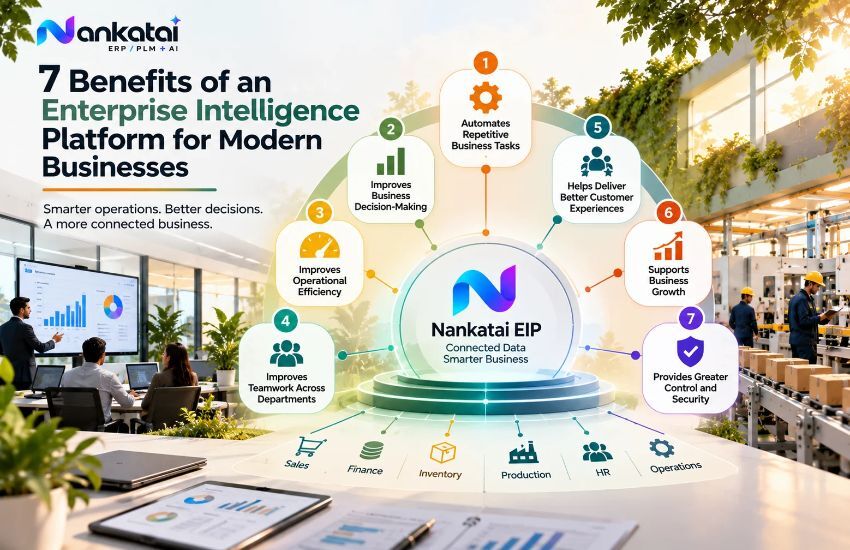
7 Key Benefits of an Enterprise Intelligence Platform
1. Automates Repetitive Business Tasks
Employees often spend a lot of time on regular tasks, such as entering information, creating reports, updating records, and responding to requests. Although these activities are important, they leave employees with less time for other valuable work.
An EIP can handle suitable repeated tasks automatically through predefined workflows and AI-powered features. This supports business process automation and reduces the amount of work employees need to do manually.
For example, a company can automate the preparation of regular reports or send employee requests directly to the right department. This is one of the main Enterprise Intelligence Platform benefits because employees can spend more time solving problems, helping customers, and handling other important responsibilities.
2. Improves Business Decision-Making
Businesses can make better decisions when they have access to accurate and useful information. However, important details are often stored in different spreadsheets, software applications, and departmental records.
An EIP can collect relevant information from different sources and use Data Analysis to find patterns, identify changes, and present useful findings. This helps managers understand how the business is performing and which areas need attention.
For example, a sales manager can study sales patterns, compare results from different periods, and find products that may need more attention. AI in business can also help by summarizing information and pointing out possible trends. However, managers should check these findings carefully and use their own judgment before making important business decisions.
3. Improves Operational Efficiency
When different departments use separate systems, work can become slower and the same tasks may be repeated. Employees might have to look for information in different places, ask other team members for details, or enter the same information into several applications.
An Enterprise Intelligence Platform can bring related information together and simplify workflows, helping employees manage their daily tasks more easily.
Companies that want to understand how to improve operational efficiency with AI can start by finding tasks that require repeated data entry, too many approvals, or frequent communication between teams. Better operational efficiency helps businesses make better use of their employees' time and available resources.
4. Improves Teamwork Across Departments
Different departments may have their own goals, software, and ways of handling information. When teams do not coordinate properly, misunderstandings and work delays can occur.
An EIP can allow employees to access shared business information based on their roles and permissions. This makes it easier for departments such as sales, finance, human resources, and operations to work together.
Effective Business operations management helps employees coordinate their work, understand their duties, and complete tasks without unnecessary transfers between teams.
5. Helps Deliver Better Customer Experiences
Customers want quick replies, correct information, and reliable service. Meeting these expectations can be difficult when customer details are incomplete or stored in different systems.
An EIP can help employees find the right customer information, review earlier conversations, and respond to requests more effectively.
Customer data analysis can also help businesses understand customer preferences, find common complaints, and identify service problems that occur repeatedly, improving overall Customer Experience.
6. Helps Reduce Manual Errors and Improve Data Management
Entering information manually and handling the same data multiple times can cause mistakes. Wrong figures, old records, and differences in stored information can affect reports and business decisions.
An EIP can use Data Automation to move information between connected processes, keep routine activities consistent, and reduce the need for repeated data entry.
However, automation cannot prevent every mistake. Businesses must still use proper access controls, check data for accuracy, review records regularly, and follow clear rules when handling sensitive information.
7. Helps Businesses Grow Over Time
As a company expands, managing its daily activities can become more challenging. It may have to handle more customers, staff, payments, and business locations while keeping extra paperwork and administrative tasks under control.
An EIP helps businesses create smoother work processes and add automation as their requirements grow. It can also support Enterprise digital transformation by allowing companies to introduce AI-based tools in a planned and organized manner.
Choosing a suitable platform helps companies improve their work processes gradually instead of adding separate tools every time a new need arises.
How EIP Helps Businesses Work More Efficiently
An Enterprise Intelligence Platform delivers the best results when it meets a company's specific needs. Businesses should first identify tasks that take too much time, missing information, and work processes that often lead to delays.
After identifying these areas, they can choose suitable AI-powered business solutions and automate tasks where they can make a real difference.
For example, sales teams can use Sales Automation Tools to manage follow-ups and handle regular sales activities more easily. Customer Relationship Management (CRM) AI features can also help organize customer details and find opportunities to communicate with customers more effectively.
To measure how business automation improves productivity, companies should track factors such as the time required to complete tasks, the number of errors, response times, and employee workload.
How to Select the Right Enterprise Intelligence Platform
Before choosing a platform, businesses should review a few important points:
- Business needs: Find out which tasks and departments need the most help.
- Integration with existing tools: Check whether the platform can connect with the software and data sources the company already uses.
- Security and privacy: Understand how the platform protects information, manages user access, stores data, and handles backups.
- Room for growth: Select a solution that can meet the company's needs as its operations expand.
- Ease of use: Make sure employees can learn and use the platform without facing unnecessary difficulties.
- Cost and results: Compare the expected benefits with the costs of setting up and maintaining the platform.
Companies should also check which tasks the system can complete automatically, when employees need to approve an action, and how it deals with errors or missing details.
Conclusion
The Benefits of an Enterprise Intelligence Platform include much more than automating everyday tasks. The right platform can help businesses make informed decisions, improve teamwork, provide better customer service, and handle increasing workloads more efficiently.
As AI-based tools become more useful for everyday business activities, companies can use intelligent automation to reduce manual work and get more value from their business information.
The most important step is to choose a platform that solves actual business problems, keeps important information secure, and delivers results that can be measured. When used effectively, an Enterprise Intelligence Platform can support business growth and help companies improve their operations over the long term.